Mold in Your Home? Start Here
Finding mold in your home is unsettling. Maybe it is a musty smell in the basement. Maybe it is dark spots on a ceiling, or a wall that never quite dries. Feeling worried is normal, and you are not alone.
Anthonyspent Mold Help is a referral service. It does not do the work itself. It connects you with independent providers in the Aurora area who handle residential mold removal, black mold remediation, and mold inspection and testing.
Most people ask about price first, and that makes sense. Typical U.S. ranges look like this: an inspection with testing often runs a few hundred dollars up to about a thousand, and remediation commonly runs from the low thousands to well above that for big or hidden problems. Every job is different, so a written quote matters.
You do not need to have it all figured out today. You can learn your options, ask questions, and decide at your own pace.
Get Started
Request a callback to check provider availability in Aurora, or ask for an estimate online. There is no obligation either way.
How It Works
How the referral works
You share a few details about your home and what you are seeing. Anthonyspent Mold Help passes that request to a local provider in its network. The provider reaches out, asks questions, and can plan a visit. You compare what you hear and choose what feels right. Anthonyspent Mold Help does not do the work, and each provider sets its own schedule and pricing.
The options in plain words
Not every mold problem needs the same fix. Here is how the paths often look:
- Inspection and testing. A provider looks for visible growth and moisture, and may take air or surface samples. Ask about certified mold testing if you want lab results.
- Residential mold remediation. Providers contain the area, remove affected material, clean, and dry. Then they look at the cause.
- Black mold removal. Dark growth gets the same careful steps, with extra attention to containment and protective gear.
- Fixing the moisture. A leak, a clogged gutter, or a tired sump pump may need repair so mold does not return.
What shapes the price
Cost depends on size, material, access, and how far moisture has spread. Containment, testing, and rebuilding can add to the total. A small bathroom patch is not priced like a wet basement. Typical U.S. totals run from a few hundred dollars for light surface cleaning to several thousand for larger jobs, and they vary a lot. Ask each provider for a written quote that lists the scope, the steps, and what is not included.
Small steps you can take today
Take clear photos. Write down where you smell something musty. Keep the area dry if you can, and try not to scrub or stir up dark patches. These notes help a provider give you a better quote.
Homes We Connect Across
Anthonyspent Mold Help connects homeowners in Aurora and across the Aurora area with independent providers. The weather here shapes how mold shows up. Cold winters bring deep frost, and warm indoor air can leave damp spots on chilly walls. Summers turn hot and humid, which feeds growth in closed-up rooms. Severe thunderstorms and hail can damage roofs and open a path for water. Spring flooding can leave a basement soaked.
Many homes here have full basements with sump pumps. Plenty are frame houses that have stood for many decades, and bungalows and ranch homes are common too. Older framing, slow leaks, and crawl spaces can hide moisture for a long time.
Providers in the network know these home types. Searching for mold inspection near me is a natural first step, and an estimate request can narrow the field. You pick the provider, and you decide whether to move ahead.
Get Started
Prefer to talk it through? Request a callback to check provider availability near you.
Good to Know Before Anyone Starts Work
Signs that point to mold
A musty smell is the most common clue. You may also see fuzzy or speckled patches in green, gray, brown or black. Peeling paint, warped boards, and stains that return after cleaning are other hints. If you notice any of these, you do not need to panic. You just need a closer look.
Where mold likes to hide
Mold grows where moisture lingers. Think behind bathroom walls, under sinks, around windows, inside attics, and in crawl spaces. It can sit behind wallpaper or under carpet pads. That is why a visual check by a provider can find more than a quick glance does.
Basements and sump pumps
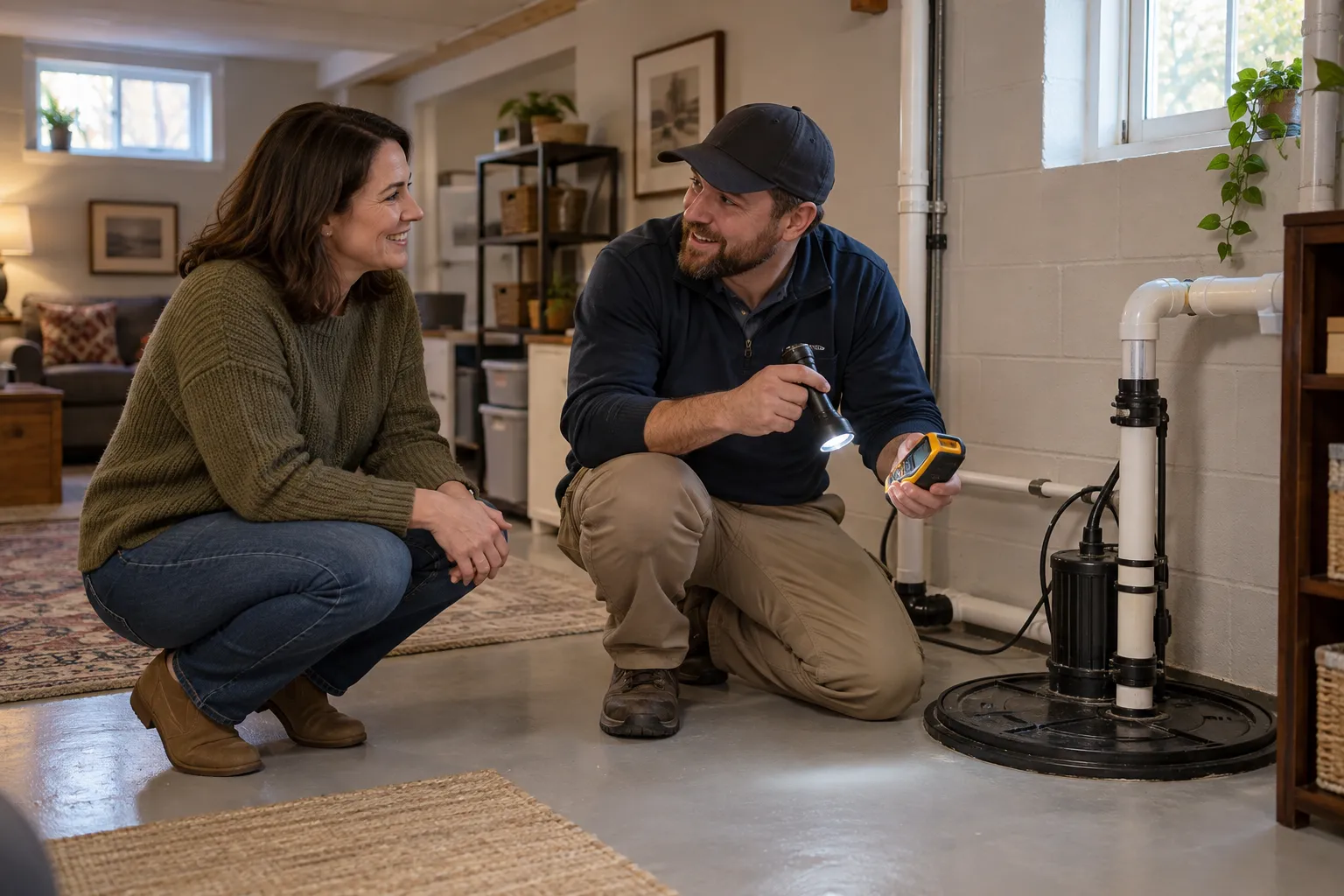
Full basements are common here, and many rely on sump pumps. If a pump fails or the pit overflows, walls and stored boxes can stay damp. Test your pump now and then, and keep gutters pointed away from the foundation. Small habits can protect a lot.
After spring flooding or a storm
Flood water and storm leaks soak materials fast. Mold can start within a couple of days if things stay wet. Drying out matters first. Then a provider can check what can be cleaned and what should be removed.
Summer humidity and winter condensation
Hot, sticky summers load indoor air with moisture. Cold winters create condensation on windows and in attics. Both can feed mold quietly. A dehumidifier, steady airflow, and working bath fans help keep levels down.
Inspection first, or cleanup first?
If you can plainly see a patch, a provider may price cleanup straight from a visit. If you only smell something, inspection and testing can show where it comes from. Many homeowners start there. It turns a guess into a plan.
Questions worth asking a provider
Ask what the written quote includes and what it leaves out. Ask how the area will be contained, how the moisture source will be handled, and whether mold testing is offered. Ask about timing, too. Clear answers are a good sign.
What about insurance?
Some policies may cover sudden damage, such as a burst pipe, but not slow leaks or neglect. Check your policy and talk with your insurer. Providers can often help document damage for a claim, so keep photos and any reports handy.
Keeping mold from coming back
Cleanup lasts longer when the cause is fixed. That may mean patching a roof, sealing a window, regrading soil, or improving ventilation. Keep indoor humidity under about 50 percent when you can, and dry wet spots quickly.
Taking the next step calmly
You have time to ask questions. Compare a couple of written quotes. Choose the provider who explains things clearly. Mold is a solvable problem, and you can handle it one step at a time.
Ask a Question
Questions are welcome, and nobody will pressure you. Share what you are seeing in your home, and a local provider can follow up with next steps. Use the form to request an estimate, and ask about timing and availability.
Get Started
If you would rather talk, Request a callback to check provider availability. There is no obligation to hire anyone.